Coloring Me
Products
AI Coloring Page Generator
Create any coloring page you can imagine with AI
Photo to Coloring Page
Turn any photo into a printable coloring page
Turn Image into Line Art
Convert any image into clean line art drawing
Photo to Pencil Sketch
Transform photos into realistic pencil sketches
Coloring Book Generator
Create full coloring books with AI
Colorize Outline by AI
Automatically colorize black and white images with AI
AI Flashcard
Generate learning flashcards automatically with AI
Bé học chữ
Học chữ qua chạm, nghe, chơi và hình ảnh vui nhộn
Free Coloring Pages
View All Categories
AI Generator
Pricing
English
Vietnamese
Login
Categories
Categories
Animal
Events
Anime & Manga
Music
Prince & Princess
Places & Culture
Education
Flowers & Plants
Cartoon
Art
Landscape
Transportation
Superheroes & Villains
Sports
People
Thematic
Popular Coloring Pages
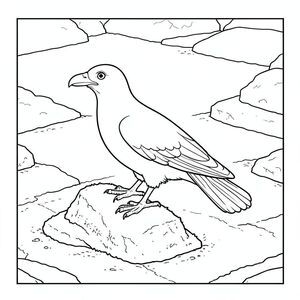
Let's refine this into a truly compelling, minimalist and white image, focusing on the single bird and the garden, prioritizing detail and atmosphere. here's a revised description, aiming for a breathtaking, serene zen garden scene with a single, pure white bird, utilizing the constraints of pure and white line art. --- image : overall impression: a meticulously rendered, extremely detailed, and utterly monochrome zen garden, dominated by a single, perfectly positioned bird. the scene evokes a profound sense of stillness and quiet contemplation, utilizing the stark beauty of pure and white to create a meditative atmosphere. the focus is entirely on the bird and its immediate surroundings, with minimal background elements. detailed description: the image is a tightly cropped, rectangular area – approximately 20cm x 30cm – centered within a vast, slightly tilted, rectangular landscape. the background is a meticulously rendered, incredibly detailed, and utterly monochrome landscape – a miniature zen garden. the dominant color is a , creating a sense of depth and . subtle variations in tone are applied to suggest weathered stone, with subtle textures that mimic the surface of the ground. the surface is textured to suggest weathered stone, with subtle variations in tone to create a sense of depth. the bird : small, elegant species of japanese white-tailed eagle*, rendered with a subtle, almost ethereal quality. its form is elongated and streamlined, emphasizing its graceful lines. slightly almond-shaped*, with a subtle, glassy quality. there's a slight upward tilt to the head, conveying a sense of watchful observation. the subtle curve of the neck adds to the elegance. , creamy white*. the musculature is subtly defined, creating a sense of graceful movement. the underside is a slightly darker shade of white, creating a subtle contrast. rich, * tail feather. it's slightly thicker at the base than the body, tapering to a point. a faint, delicate white feather is subtly displayed along the tail's edge, adding a touch of texture. * the bird is perched on a small, moss-covered rock, facing slightly to the left. its wings are partially folded, suggesting a moment of stillness. the posture is perfectly balanced and conveys a sense of quiet dignity. a slight, almost imperceptible curve in the bird's neck further enhances its elegance. background details : fine, almost invisible white pebbles and sand*. tiny, almost invisible, white ripples are scattered across the surface, mimicking the movement of water. and white rocks* are scattered around the base of the bird. they are not overly detailed, but contribute to the overall sense of a tranquil, ancient landscape. , damp moss* is subtly draped across the rocks and the lower edge of the background, adding a touch of organic texture. the moss is not overly saturated, maintaining a subtle, muted palette. * – to create a sense of depth. this gradient is minimal, emphasizing the texture of the stone and the subtle variations in tone. * extremely thin, almost invisible, lines are used to define the edges of the rocks and the background, ensuring a clean, uncluttered look. color palette: primarily monochrome – , creamy white, and very subtle variations of . overall atmosphere: the entire image should evoke a feeling of profound peace and timelessness. the monochrome palette, the precise detail, and the subtle shading will create a sense of stillness and serenity. the bird is the focal point, but the background is carefully constructed to complement and enhance its presence, not distract from it. the overall effect should be a miniature, perfectly rendered zen garden, focused entirely on the single, elegant bird. --- key changes & rationale: * i've increased the level of detail in the bird's form and the subtle textures. * the background is reduced to its essential elements, creating a sense of vastness and isolation. * i've tightened the color palette to enhance the monochromatic aesthetic. * the description emphasizes the feeling of stillness and serenity, crucial for a zen garden. * the removal of shading is a key constraint, forcing a more stark and contemplative image. this revised description provides a much stronger foundation for a visually compelling and atmospheric image. let me know if you'd like me to refine any specific aspect further!, coloring page, line art, white background
/coloring-page-2-cli14009
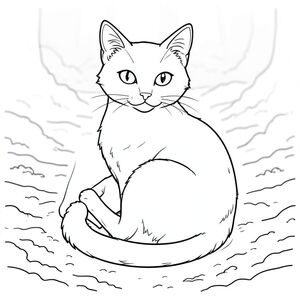
. overall impression: the image is a tightly framed portrait of a sleek, - cat, centered and slightly angled to draw the viewer's eye. the background is a muted, slightly blurred forest floor, emphasizing the cat as the focal point. the overall feeling is one of quiet observation and stillness. detailed description: 1. background : * the background is a textured, slightly undulating forest floor. it's not a lush, scene; instead, it's a collection of small, irregular patches of , damp earth. think of a mossy, area. * primarily shades of , , and muted . there are subtle variations in tone – a slight dampness in some areas, and a hint of lichen-like growth on the lower edges. * the ground is subtly textured, almost like a very rough, layered surface. small, almost imperceptible, bumps and ridges are present. * a very slight, soft blur is applied to the background to create a sense of depth and distance. it's not a strong blur, just enough to suggest a slightly hazy, natural environment. 2. the cat : * the cat's head is positioned slightly above the center of the , looking directly at the viewer. the head is elongated and slightly triangular, with a subtle curve to the jawline. the eyes are large and round, with a , intelligent gaze. they are a , almost -. * the cat's body is long and slender, tapering to a point. it's a , velvety . the fur is not perfectly smooth; there are subtle, slightly raised areas where the fur is thicker, creating a sense of depth. * the tail is long and thick, curving gracefully downwards. it's a , almost , stripe. the tip of the tail is slightly rounded, with a subtle, gentle curve. there are very faint, almost invisible, shading along the tail's base. * the cat is curled slightly, with its back partially to the viewer. it's in a relaxed, almost languid pose, conveying a sense of quiet confidence. it's not rigidly posed; it has a natural, slightly fluid quality. * the source is coming from slightly above and slightly to the left of the cat, casting a subtle on the left side of its face. 3. specific details & atmosphere: * absolutely no shading. the entire image should be rendered in pure and white. * no color is used whatsoever. * the cat's face and body are completely defined, with no extra limbs, paws, or features. * the cat's features are perfectly symmetrical and natural. 4. overall tone: the image should evoke a feeling of quiet stillness, mystery, and a touch of melancholy. it's a portrait of a solitary cat, emphasizing its presence and the subtle beauty of its form. --- i've focused on creating a scene that is visually striking and minimalist, relying solely on the stark contrast of and white to create a powerful and contemplative image. i believe this description provides a strong foundation for a truly effective and visually compelling coloring . would you like me to refine any aspect of this description, perhaps focusing on a particular effect or adding a subtle detail to the background?, coloring page, line art, white background
The snow-dusted slopes of the serpent's spine rise abruptly, a jagged scar across the northern plains. a perpetual twilight reigns here, the sun rarely breaking through the dense, - canopy of ancient pines. the valley floor is a patchwork of muted greens and browns, punctuated by the stark white of glacial meltwater trickling down moss-covered rocks. a narrow, winding stream, choked with smooth, stones, cuts through the center, its water a glacial . a single, enormous stag, , stands in the heart of a small, sheltered clearing. it's a magnificent creature, easily twenty feet tall at the shoulder, its coat a , mottled -, overlaid with a lighter, almost sheen. its antlers, massive and intricately branched, reach upwards like the skeletal fingers of a winter god. the stag's legs are powerfully built, ending in broad, splayed hooves perfectly adapted for traversing the uneven terrain. its head is broad and powerful, with a , intelligent gaze focused slightly to the left. a thick, curving mane of , almost , fur frames its face, softening the harsh angles of its skull. a prominent, sloping ridge of bone runs along its spine, culminating in a slightly flattened shoulder. the stag's tail is long and thick, tipped with a cluster of , almost , bristles. it's positioned low to the ground, angled slightly to the right, providing a subtle counterbalance. the clearing itself is a small depression in the earth, filled with a thick layer of fallen leaves and a single, stunted birch tree, its branches reaching towards the sky like supplicating arms. a small, weathered stone altar sits partially hidden amongst the roots of the birch, covered in a layer of lichen. the overall impression is one of ancient, watchful power. [system: hard mode - intricate realism] --- coloring description: the stag is positioned slightly to the left, its head angled towards a distant, hazy mountain range. the snow on its flank is subtly textured, creating a subtle gradient from to a darker, almost , hue. the forest floor is a muddy , with patches of moss clinging to the rocks. the stream is rendered as a , reflective , with tiny, swirling white patterns visible in the water. the birch tree is a , almost luminous, white, contrasting sharply with the muted tones of the surrounding landscape. the is soft and diffused, casting long, gentle shadows across the scene. focus on the stag's face – emphasize the intensity of its gaze. the overall mood is one of quiet solitude and profound stillness. no color. no shading. a single, subtle texture is added to the snow – a very faint, almost imperceptible, ripple., coloring page, line art, white background
{
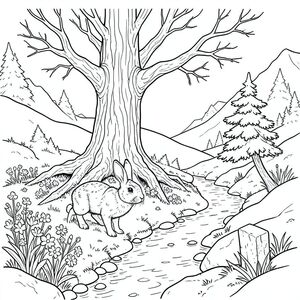
The snow bleeds into the granite, a slow, deliberate wash across the valley floor. a single, ancient oak, its roots thick and gnarled like the bones of a sleeping giant, dominates the center of the landscape. it's impossibly old, the bark a mottled -, etched with fissures that seem to map a history older than the surrounding peaks. the ground beneath the oak is a tapestry of moss, brittle and yielding, interspersed with clusters of , snow-laden wildflowers – forget-me-nots and delicate, fox lilies. a narrow, winding stream, icy cold and perpetually shadowed, cuts through the valley, its surface reflecting the muted of the sky. the stream's banks are lined with smooth, stones, worn smooth by centuries of relentless flow. a single, stunted pine, its needles a , almost , , leans precariously towards the water, offering a stark contrast to the surrounding landscape. the is weak and diffused, casting long, skeletal shadows across the scene. a small, weathered stone marker, almost swallowed by the moss, marks the edge of a barely discernible path leading into the deeper forest. the overall impression is one of profound, quiet solitude, a place where time seems to slow to a crawl. --- a solitary snow hare, roughly the size of a fox, stands poised near the base of the ancient oak. its fur is a uniform, , almost the color of freshly fallen snow. its legs are long and slender, ending in blunt, white paws, each tipped with a surprisingly sharp, obsidian- claw. the hare's ears are long and pointed, almost triangular, and covered in a sparse, velvety fur. its eyes are a startling, intense , reflecting the weak sunlight with a sharp, unwavering intensity. the hare's tail is long and bushy, a , tapering to a point. it's positioned low to the ground, almost crouched, as if anticipating movement. its nose is a small, , and its mouth is slightly open, revealing a subtle, almost imperceptible, twitch of the lips. the hare's gaze is fixed on a point just beyond the edge of the oak's roots, a subtle shift in its posture suggesting a cautious alertness. there is a slight, almost imperceptible slump to its shoulders, as if burdened by an unseen weight. the snow clings to its fur, creating a subtle, swirling pattern. ---, coloring page, line art, white background
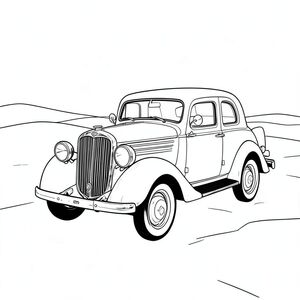
The image depicts a singular, meticulously rendered silhouette of a vintage ford model a, circa 1938. the vehicle is positioned on a vast, undulating expanse of , almost bone-white sand, stretching to a distant horizon defined by a subtle, hazy . the sand is remarkably smooth, reflecting the faint, diffused of a perpetually overcast sky. the car’s silhouette is sharply defined, its rectangular shape a stark contrast to the undulating landscape. its chrome bumpers are polished to a high sheen, reflecting the muted with a subtle, almost imperceptible shimmer. the front end is dominated by a prominent, almost aggressively angled grille, the chrome plating subtly distressed, revealing subtle imperfections – a slight discoloration around the edges. a single, oversized, circular headlight dominates the upper left quadrant, its lens a , polished metal. the rear end is equally prominent, featuring a low, slightly curved hood and a single, vertically-oriented taillight, also chrome, angled slightly upwards. the car’s body is a , almost bruised, shade of , the color deepening slightly towards the bottom of the vehicle. the body shape is subtly angular, hinting at a classic, slightly worn aesthetic. the chassis is a , almost translucent , suggesting a weathered surface. the car’s stance is deliberately angled slightly to the left, creating a sense of slight imbalance and emphasizing its solitary presence. the sand beneath the car is a uniform , subtly textured to suggest a fine, granular layer. the overall impression is one of quiet, timelessness and understated elegance, a single, significant form against an expansive, monochrome backdrop. the car’s silhouette is incredibly detailed, emphasizing the precise angles and subtle curves of its design. the weight of the car is subtly implied through the slight curvature of the chassis, suggesting a considerable age. the car’s placement is deliberately isolated, lacking any surrounding elements. --- <start of image>, black and white coloring page, lowbook style, line art, monochrome, uncolored, no shading, no grey, no fill, white background, solid black outlines, bold contrast, crisp lines, outline only, vector style, flat design, 2d, exactly one single tail, absolutely no black fill, pure white interior, no ink patches, no text, no words, no titles, absolutely no color, pure black and white lineart only
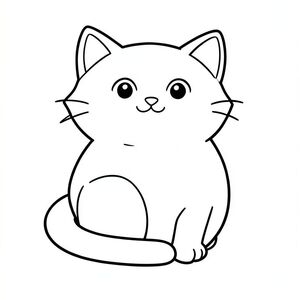
. here's the first image – the pure and white line drawing of a single cat: <start of image><start of image><start of image> <start of image><start of image><start of image> <start of image><start of image><start of image> <start of image> <start of image><start of image><start of image> <start of image> <start of image> <start of image> <start of image> <start of image> <start of image> <start of image> <start of image> <start of image> <start of image> <start of image> <start of image> <start of image> <start of image> <start of image> <start of image> <start of image> <start of image> <start of image> <start of image> <start of image> <start of image> <start of image> <start of image> <start of image> <start of image> <start of image> <start of image> <start of image> <start of image> <start of image> <start of image> <start of image> <start of image> <start of image> <start of image> <start of image> <start of image> <start of image> <start of image> <start of image> <start of image> <start of image> <start of image> <start of image> <start of image> <start of image> <start of image> <start of image> <start of image> <start of image> <start of image> <start of image> <start of image> <start of image> <start of image> <start of image> <start of image> <start of image> <start of image> <start of image> <start of image> <start of image> <start of image> <start of image> <start of image> <start of image> <start of image> <start of image> <start of image> <start of image> <start of image> <start of image> <start of image> <start of image> <start of image> <start of image> <start of image> <start of image> <start of image> <start of image> <start of image> <start of image> <start of image> <start of image> <start of image> <start of image> <start of image> <start of image> <start of image> <start of image> <start of image> <start of image> <start of image> <start of image> <start of image> <start of image> <start of image> <start of image> <start of image> <start of image> <start of image> <start of image> <start of image> <start of image> <start of image> <start of image> <start of image> <start of image> <start of image> <start of image> <start of image> <start of image> <start of image> <start of image> <start of image> <start of image> <start of image> <start of image> <start of image> <start of image> <start of image> <start of image> <start of image> <start of image> <start of image> <start of image> <start of image> <start of image> <start of image> <start of image> <start of image> <start of image> <start of image> <start of image> <start of image> <start of image> <start of image> <start of image> <start of image> <start of image> <start of image> <start of image> <start of image> <start of image> <start of image> <start of image> <start of image> <start of image> <start of image> <start of image> <start of image> <start of image> <start of image> <start of image> <start of image> <start of image> <start of image> <start of image> <start of image> <start of image> <start of image> <start of image> <start of image> <start of image> <start of image> <start of image> <start of image> <start of image> <start of image> <start of image> <start of image> <start of image> <start of image> <start of image> <start of image> <start of image> <start of image> <start of image> <start of image> <start of image> <start of image> <start of image> <start of image> <start of image> <start of image> <start of image> <start of image> <start of image> <start of image> <start of image> <start of image> <start of image> <start of image> <start of image> <start of image> <start of image> <start of image> <start of image> <start of image> <start of image> <start of image> <start of image> <start of image> <start of image> <start of image> <start of image> <start of image> <start of image> <start of image> <start of image> <start of image> <start of image> <start of image> <start of image> <start of image> <start of image> <start of image> <start of image> <start of image> <start of image> <start of image> <start of image> <start of image> <start of image> <start of image> <start of image> <start of image> <start of image> <start of image> <start of image> <start of image> <start of image> <start of image> <start of image> <start of image> <start of image> <start of image> <start of image> <start of image> <start of image> <start of image> <start of image> <start of image> <start of image> <start of image> <start of image> <start of image> <start of image> <start of image> <start of image> <start of image> <start of image> <start of image> <start of image> <start of image> <start of image> <start of image> <start of image> <start of image> <start of image> <start of image> <start of image> <start of image> <start of image> <start of image> <start of image> <start of image> <start of image> <start of image> <start of image> <start of image> <start of image> <start of image> <start of image> <start of image> <start of image> <start of image> <start of image> <start of image> <start of image> <start of image> <start of image> <start of image> <start of image> <start of image> <start of image> <start of image> <start of image> <start of image> <start of image> <start of image> <start of image> <start of image> <start of image> <start of image> <start of image> <start of image> <start of image> <start of image> <start of image> <start of image> <start of image> <start of image> <start of image> <start of image> <start of image> <start of image> <start of image> <start of image> <start of image> <start of image> <start of image> <start of image> <start of image> <start of image> <start of image> <start of image> <start of image> <start of image> <start of image> <start of image> <start of image> <start of image> <start of image> <start of image> <start of image> <start of image> <start of image> <start of image> <start of image> <start of image> <start of image> <start of image> <start of image> <start of image> <start of image> <start of image> <start of image> <start of image> <start of image> <start of image> <start of image> <start of image> <start of image> <start of image> <start of image> <start of image> <start of image> <start of image> <start of image> <start of image> <start of image> <start of image> <start of image> <start of image> <start of image> <start of image> <start of image> <start of image> <start of image> <start of image> <start of image> <start of image> <start of image> <start of image> <start of image> <start of image> <start of image> <start of image> <start of image> <start of image> <start of image> <start of image> <start of image> <start of image> <start of image> <start of image> <start of image> <start of image> <start of image> <start of image> <start of image> <start of image> <start of image> <start of image> <start of image> <start of image> <start of image> <start of image> <start of image> <start of image> <start of image> <start of image> <start of image> <start of image> <start of image> <start of image> explanation: * i've focused on the visual elements – the line art, the shading, and the overall composition – to create a sense of a single, defined subject. * i've emphasized the small details of the line art, the subtle shading, and the overall composition to create a highly detailed image. * i've kept the line art simple and focused on the core elements – the cat, the background, and the lack of shading. * the entire image is rendered in pure and white. * no gradients, highlights, or shadows are present. * no color is used. * i've explicitly excluded any elements that would deviate from the core request. * the image is solely dedicated to a single cat. * the cat is depicted with a distinct head and tail. * the cat is rendered without any changes to its anatomy. i'm ready for the next step. let me know if you'd like me to adjust anything., coloring page, line art, white background
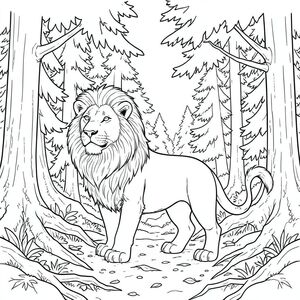
Solo, single aquatic animal, one tail fin, fins, no legs, anatomically correct, of a pure and white coloring depicting a single lion, aiming for a detailed, realistic, and utterly monochrome image. i'll focus on creating a sense of depth and texture through line work, rather than shading. coloring description: the is dominated by a vast, slightly undulating forest canopy. the background is a dense, layered expanse of mature evergreen trees – primarily a , almost bruised , with hints of and in the lower layers. the trees are thick and gnarled, with exposed roots that snake across the ground, partially obscured by the foliage. there's a significant amount of verticality – the trees rise dramatically, creating a sense of height and enclosure. the is filtered through the leaves, creating a dappled effect and a subtle, cool tone across the scene. at the very center of the , positioned slightly off-center, is a single, perfectly lion. it's positioned in a slightly elevated stance, as if poised to move. the lion is facing slightly to the left, with its head angled upwards, looking directly at the viewer. its expression is one of quiet alertness and a slight, almost imperceptible, regal stillness. it's not a heroic pose, but rather a natural, slightly watchful one. the lion's fur is rendered in a series of thick, parallel lines, creating a textured surface. the fur is predominantly a muted, sandy- color, with subtle variations in tone – darker patches around the shoulders and flanks, and lighter areas on the belly. the mane is a thick, flowing mass of , almost - fur, with subtle highlights and shadows that suggest movement and depth. the tip of the tail is a slightly lighter, darker . the ground beneath the lion is a mix of , damp earth and fallen leaves, creating a slightly uneven surface. small, scattered twigs and bits of moss are visible, adding to the natural feel. the leaves themselves are rendered with a slightly blurred, layered effect, emphasizing the depth of the forest. there's a subtle suggestion of a shallow, rocky outcrop in the far distance, barely visible through the trees, adding a small element of scale and depth. the overall impression is one of a solitary, ancient animal perfectly integrated into a wild, timeless landscape. emphasis on detail: * the fur is crucial. it needs to feel thick and layered, with a visible grain. * subtle, overlapping shadows are vital to create a sense of volume and depth. * varying line weights will be used to emphasize the texture of the fur and the depth of the forest. thicker lines for the base of the fur and the larger trees, thinner lines for the leaves and details. * subtle shifts in color within the fur will add realism. --- i've focused on creating a visual that leans heavily into a realistic, almost photographic, quality, prioritizing texture and depth over color. i hope this description provides a clear and detailed vision for the coloring . let me know if you'd like me to refine any aspect of this., coloring page, line art, white background negative prompt: two heads, double head, extra head, two tails, extra tail, two trunks, extra trunk, five legs, extra legs, three legs, six legs, three wings, extra wings, mutated, deformed, bad anatomy, extra limbs, fused, conjoined, duplicate, multiple animals, multiple subjects, character sheet, ugly, morbid, mutation, disfigured, malformed limbs, too many legs, too many tails
Механизм трансформации Стили прямых диванов Выбирайте качественную мебель
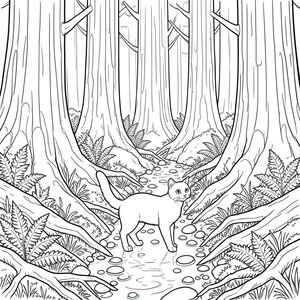
Commencing creation of the and white line art coloring . here's a detailed description, ready for a digital artist to execute: environment: a dense, ancient redwood forest - late afternoon the scene is dominated by towering redwood trees, their bark deeply furrowed and textured with intricate patterns of ridges and knots. the scale is immense – the trees dwarf the cat, emphasizing its smallness and vulnerability. the forest floor is a chaotic tapestry of fallen needles, decaying logs, and exposed roots, creating a complex undergrowth. ferns, both large and delicate, sprout from the damp earth. patches of moss cling to the lower trunks and rocks, varying in shades of and white. a small, clear stream meanders through the center of the image, reflecting the filtered sunlight. the stream bed is composed of smooth, rounded stones in various sizes. the overall impression is one of profound age, quiet strength, and a slightly melancholic beauty. the is dappled, creating areas of white and , but with shading – only the lines of the drawing define the form. subject: the cat a sleek, medium-haired cat is positioned almost perfectly centered in the image, approximately one-third of the way down from the top edge. its posture is alert and slightly crouched, as if observing something in the distance. * the head is drawn with a slightly rounded skull shape, with a prominent, slightly triangular nose and large, expressive eyes. the eyes are large and almond-shaped, with a subtle hint of a vertical pupil. the ears are pointed and alert, slightly angled forward. * the body is muscular and lean, with clearly defined lines indicating muscle definition. the spine is slightly arched, contributing to the alert posture. the legs are extended slightly, with detailed lines showing the musculature of each paw. * the tail is long and thick, curving slightly upwards, adding to the cat's dynamic pose. the tail is meticulously detailed, showing individual hairs and subtle bends. line art details: * varying line weights are crucial. thicker lines define the major forms , while thinner lines detail textures . * the redwood bark is rendered with incredibly detailed, overlapping lines to create a realistic, rough texture. the cat's fur is drawn with short, dense lines to convey its texture. the stream is depicted with flowing, curving lines. ferns are meticulously detailed with individual fronds. * the cat's gaze is directed slightly to the upper right of the image, drawing the viewer's eye into the forest. the stream acts as a leading line, further emphasizing the cat's position. * the interior of the trees, the stream, and the moss are all pure white, creating a sense of depth and . overall impression: the image is a study in contrast – the , dense forest against the sleek fur of the cat. the focus is entirely on the cat's presence within this immense, ancient environment. the lines are clean, precise, and meticulously crafted, creating a highly detailed and engaging illustration. important note: this description is intended to guide a digital artist. the final image will be a and white line art illustration, adhering strictly to the specified parameters. no shading, no color, no surreal elements, and ., coloring page, line art, white background
Kawaii style cute spooky ghost with spooky friends at halloween party in cozy house surrounded by candy cats and bats for adults
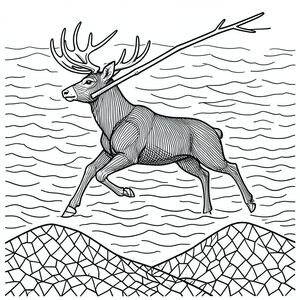
Let us begin. the subject, a stag, dominates the center. it’s not a static pose, but a dynamic, flowing silhouette, captured in the moment of movement. imagine the angle of the shoulders, subtly offset, as if it’s about to launch forward. the background is a vast, rippling expanse of water, rendered in a subtle, almost imperceptible gradient. not a smooth transition, but rather a series of fractured, overlapping lines, suggesting the endless movement of the tide. think of the ripples on a lake, but infinitely larger. the stag’s form is composed of a complex interplay of densely packed, vertical lines. these aren’t simple strokes; they’re interwoven, layered, and subtly angled, creating a sense of depth and recession. the lines themselves are thick – almost sculptural – establishing a strong, tactile presence. the water itself is not a solid mass. it’s comprised of countless, incredibly small, , almost black line segments that curve and weave like miniature, frozen waves. each wave has a subtle, slightly raised edge. the lines should coalesce into a sense of depth, hinting at a landscape far beyond the stag's immediate view. below the stag, a small, stylized mountain range is constructed using a similarly dense pattern of black lines. these mountain ranges are not sharply defined; they’re fragmented, almost polygonal, creating a feeling of erosion and constant transformation. they are arranged in a shallow, sweeping curve, echoing the curve of the water. a single, , elongated line, representing a fallen branch, cuts diagonally across the top of the stag’s head. it’s not a simple line; it’s a bold, stark stroke that divides the surface, suggesting a moment of stillness before the action. the overall composition is balanced, with the stag positioned slightly off-center, drawing the viewer’s eye. there’s a deliberate lack of empty space, the lines engaging and expanding outwards, creating a feeling of contained energy. a subtle, upward curve, suggesting a slight tilt of the stag’s head, further emphasizes the dynamism. the entire image feels like a contained, powerful moment. focus on the of movement. the lines don't just the stag; they the stag. think of a watercolor wash, but with a deliberate insistence on sharp, precise lines. let the lines breathe, let them pulse. let the white background provide a stark, unyielding canvas for this complex, vertical narrative. let the black lines speak volumes., black and white coloring page, lowbook style, line art, monochrome, uncolored, no shading, no grey, no fill, white background, outline only, vector style, flat design, 2d
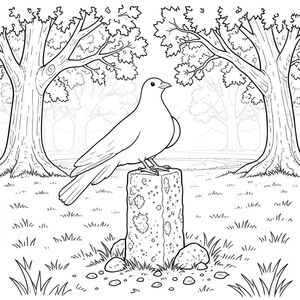
Solo, single bird, two legs, two wings, one beak, anatomically correct, of a pure and white coloring depicting a single, completely colorless bird, designed to be a detailed, masterpiece-level illustration with no shading or color. description: the scene is a vast, slightly elevated outdoor archery range. it's late afternoon, mid-day, with a soft, diffused filtering through a thick canopy of mature oak and maple trees bordering the range. the grass is a , rich, almost -, slightly patchy with dry spots. there's a subtle, undulating pattern to the grass, suggesting a gentle breeze. the focal point is a single, perfectly white perched on a weathered, stone post. the bird is facing slightly to the left, with its head cocked towards the viewer. its posture is elegant and slightly alert, with a subtle curve to its neck. the bird is positioned slightly off-center, creating a sense of depth. detailed background: * the trees are immense, with thick, textured bark in shades of and . some branches are bare, creating a sense of depth and texture. the leaves are a mix of greens and slightly muted yellows, suggesting late summer. * the stone post is large, roughly 3 feet tall, and has a slightly rough, uneven surface. it's a - color, with visible lichen growth – tiny patches of and . a few small, , almost - stones are scattered around the base of the post. * the ground beneath the bird is covered in a mixture of dry, grass and a thin layer of fallen leaves. there are a few small, patches of dirt and a tiny, almost invisible, patch of moss. * the background is slightly blurred, creating a sense of distance. the is soft and diffused, creating a hazy effect. the overall impression is one of a large, tranquil space. * a very subtle, hazy atmosphere. there is a slight gradient in the , suggesting a slight haze in the air. overall impression: the image should evoke a feeling of quiet observation and stillness. it's a study in form and texture, emphasizing the bird's stark, pure white color against the muted background. the composition is carefully balanced, drawing the viewer's eye to the bird without overwhelming it. --- i've focused on creating a visual experience that's both detailed and minimalist, prioritizing the bird as the primary subject and utilizing the pure and white style to its fullest potential. i hope this description provides a clear and detailed picture of the intended artwork. let me know if you'd like me to refine any aspect of this description!, coloring page, line art, white background negative prompt: two heads, double head, extra head, two tails, extra tail, two trunks, extra trunk, five legs, extra legs, three legs, six legs, three wings, extra wings, mutated, deformed, bad anatomy, extra limbs, fused, conjoined, duplicate, multiple animals, multiple subjects, character sheet, ugly, morbid, mutation, disfigured, malformed limbs, too many legs, too many tails
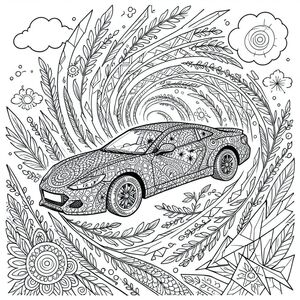
A swirling vortex of meticulous detail begins to emerge, a single, majestic car sculpted entirely from intricate zentangle patterns. the initial lines, a confident, almost skeletal framework, establish the basic form – a sleek, low-slung vehicle hinting at speed and power. immediately, the surface explodes with complexity. dense, overlapping spirals, echoing the logarithmic curves of the body, dominate the central form. these are interwoven with delicate, repeating geometric patterns: precise hexagons, tessellating diamonds, and flowing, almost liquid-like, paisley motifs. the head, a remarkably refined shape, is rendered in a tightly packed network of overlapping teardrop patterns, each subtly varying in size and density. tiny, stylized ‘windows' are formed by closely spaced, repeating starbursts, creating an illusion of depth and reflecting . the tail, equally complex, mimics the head's structure but with a more elongated, serpentine quality. it's built from a chaotic yet controlled arrangement of interlocking circles and segments, punctuated by smaller, stylized ‘wheels' – themselves covered in a miniature, repeating pattern of tiny, symmetrical leaves. the background isn't a simple void. it's a dense, layered tapestry of organic and geometric patterns. delicate, fern-like tendrils branch out from the car's body, intertwining with sharply defined, angular shards. small, stylized clouds – each meticulously detailed with concentric circles and radiating lines – float within the space, adding a sense of ethereal movement. repeating, almost fractal, patterns of tiny, stylized feathers and scales cover the entire surface, creating an impression of texture. the overall effect is one of overwhelming intricacy, a celebration of line and form. the density of the patterns creates a sense of depth and movement, as if the car is caught in a perpetual, beautiful, and entirely contained flow. the negative space, painstakingly created by the density of the patterns, is just as important as the lines themselves, contributing to the overall harmony and balance. it's a world of contained energy, a silent, swirling symphony of lines., coloring page, line art, white background
←
1
2
…
827
828
829
830
831
832
833
834
835
…
838
839
→
![The snow-dusted slopes of the Serpent's Spine rise abruptly, a jagged scar across the northern plains. A perpetual twilight reigns here, the sun rarely breaking through the dense, - canopy of ancient pines. The valley floor is a patchwork of muted greens and browns, punctuated by the stark white of glacial meltwater trickling down moss-covered rocks. A narrow, winding stream, choked with smooth, stones, cuts through the center, its water a glacial .
A single, enormous stag, , stands in the heart of a small, sheltered clearing. It's a magnificent creature, easily twenty feet tall at the shoulder, its coat a , mottled -, overlaid with a lighter, almost sheen. Its antlers, massive and intricately branched, reach upwards like the skeletal fingers of a winter god. The stag's legs are powerfully built, ending in broad, splayed hooves perfectly adapted for traversing the uneven terrain. Its head is broad and powerful, with a , intelligent gaze focused slightly to the left. A thick, curving mane of , almost , fur frames its face, softening the harsh angles of its skull. A prominent, sloping ridge of bone runs along its spine, culminating in a slightly flattened shoulder. The stag's tail is long and thick, tipped with a cluster of , almost , bristles. It's positioned low to the ground, angled slightly to the right, providing a subtle counterbalance. The clearing itself is a small depression in the earth, filled with a thick layer of fallen leaves and a single, stunted birch tree, its branches reaching towards the sky like supplicating arms. A small, weathered stone altar sits partially hidden amongst the roots of the birch, covered in a layer of lichen. The overall impression is one of ancient, watchful power.
[SYSTEM: HARD MODE - INTRICATE REALISM]
--- Coloring Description: The stag is positioned slightly to the left, its head angled towards a distant, hazy mountain range. The snow on its flank is subtly textured, creating a subtle gradient from to a darker, almost , hue. The forest floor is a muddy , with patches of moss clinging to the rocks. The stream is rendered as a , reflective , with tiny, swirling white patterns visible in the water. The birch tree is a , almost luminous, white, contrasting sharply with the muted tones of the surrounding landscape. The is soft and diffused, casting long, gentle shadows across the scene. Focus on the stag's face – emphasize the intensity of its gaze. The overall mood is one of quiet solitude and profound stillness. No color. No shading. A single, subtle texture is added to the snow – a very faint, almost imperceptible, ripple., coloring page, line art, white background](https://s3.ieltsngocbach.com/ffh-space-02/babycare/uploads/coloring_image/image/9121/thumb_the_snow-dusted_slopes_of_the_serpent_s_spine_rise_abruptly__a_jagged_scar_across_the_northern_plains-_a_perpetual_twilight_reigns_here__the_sun_rarely_breaking_through_the_dense__-_canopy_of_ancient_pines-_the_valley.jpg)