Coloring Me
Products
AI Coloring Page Generator
Create any coloring page you can imagine with AI
Photo to Coloring Page
Turn any photo into a printable coloring page
Turn Image into Line Art
Convert any image into clean line art drawing
Photo to Pencil Sketch
Transform photos into realistic pencil sketches
Coloring Book Generator
Create full coloring books with AI
Colorize Outline by AI
Automatically colorize black and white images with AI
AI Flashcard
Generate learning flashcards automatically with AI
Bé học chữ
Học chữ qua chạm, nghe, chơi và hình ảnh vui nhộn
Free Coloring Pages
View All Categories
AI Generator
Pricing
English
Vietnamese
Login
Categories
Categories
Animal
Events
Anime & Manga
Music
Prince & Princess
Places & Culture
Education
Flowers & Plants
Cartoon
Art
Landscape
Transportation
Superheroes & Villains
Sports
People
Thematic
Popular Coloring Pages
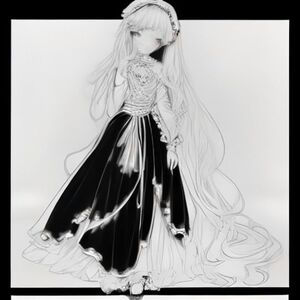
Beautiful princess🦋 behave to the dangerous and long hair for kids
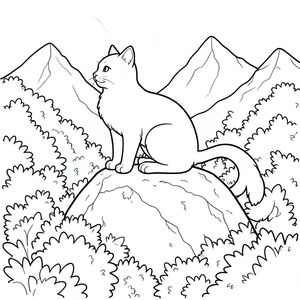
A cat sits perched atop a moss-covered boulder. it’s facing slightly to the left, a small, playful curve in its spine. the boulder is a mottled , with crevices and a rough texture. lush, bushes, densely packed, surround the cat’s base, extending towards the boulder’s edge. distant, jagged peaks of a , rocky mountain range are visible through the branches of the bushes, creating a hazy, atmospheric backdrop. the cat’s fur is a warm, creamy color, with subtle variations in tone. a single, long, white tail extends gracefully from its back, curving slightly downward. the tail is thick and fluffy, with a subtle point at the tip. the background is a wash of , muted greens and browns, subtly suggesting the depth of the forest. the composition is carefully balanced, with the cat as the focal point and the surrounding landscape providing a sense of scale and tranquility., black and white coloring page, lowbook style, line art, monochrome, uncolored, no shading, no grey, no fill, white background, outline only, vector style, flat design, 2d, exactly one single tail, absolutely no black fill, pure white interior, no ink patches, no text, no words, no titles, absolutely no color, pure black and white lineart only
мостбет найти официальный сайт [url=www.mostbet31564.shop]www.mostbet31564.shop[/url]
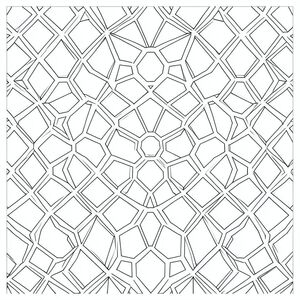
Create a high-quality coloring book page with a seamless repeating geometric pattern. the design should be clean, balanced, and visually satisfying, similar to modern abstract line art and tessellation patterns. style: - black and white line art only (no color, no shading) - crisp, smooth vector lines - medium line thickness (not too thin, not too thick) - minimalist and modern geometric style - no gradients, no textures pattern requirements: - seamless repeating pattern covering the full page - symmetrical or tessellated layout - inspired by honeycomb, interlocking shapes, optical illusion patterns, or abstract geometry - consistent spacing between lines for easy coloring - avoid overly complex details; keep it suitable for ages 10+ page setup: - white background - centered and evenly distributed pattern - no text, no watermark, no borders - high resolution (300 dpi) - portrait orientation (8.5 x 11 inches) goal: the design should be relaxing and fun to color, with repeating satisfying shapes that create a visually engaging pattern without overwhelming the user.
Seven casino uk plinko withdrawal [url=www.sevencasino62835.shop]www.sevencasino62835.shop[/url]
/coloring-page-2-cli13711
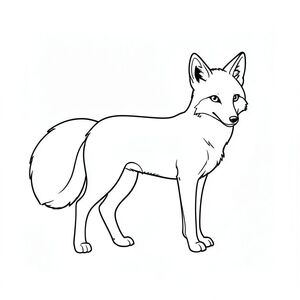
. animal: a single, sleek fox. here's the initial drawing: <start of image><start of image><start of image><start of image><start of image><start of image><start of image><start of image><start of image><start of image><start of image><start of image><start of image><start of image><start of image><start of image><start of image><start of image><start of image><start of image><start of image><start of image><start of image><start of image><start of image><start of image><start of image><start of image><start of image><start of image><start of image>, coloring page, line art, white background
Plinko slots baja volatilidad [url=plinko22480.shop]plinko slots baja volatilidad[/url]
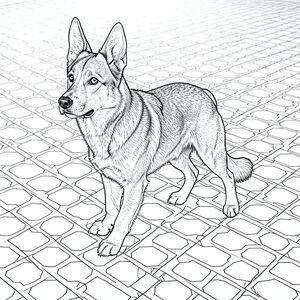
Of the image, aiming for the requested specifications. due to the limitations of -based output, i'll focus on the visual elements and the overall feeling. i'll prioritize a highly detailed, realistic, and monochrome illustration. image description: the image is a stark, almost clinical, and white illustration centered on a vast, richly patterned tile floor. the tile pattern is a complex, repeating geometric design – think a stylized, slightly abstracted honeycomb or a series of interlocking squares. the tiles are a , slightly textured -, with subtle variations in tone to create depth. the floor itself is expansive, stretching almost to the edges of the . the focal point is a single, perfectly rendered dog. it's a medium-sized breed – perhaps a german shepherd mix – with a slightly lean, muscular build. the dog is facing slightly to the left, with a focused, alert expression. its fur is a dense, short, and slightly coarse . the fur is rendered with a very fine, almost microscopic detail, emphasizing the individual strands. the dog's head is slightly tilted, conveying a sense of observation. its eyes are a , intelligent color, set within the muzzle. the nose is a , slightly wet-looking . the mouth is a subtle, slightly parted line, hinting at a quiet, watchful gaze. the dog is positioned directly in the center of the frame, occupying almost the entire width of the . it's not anthropomorphized; it's a purely realistic representation of a dog. the background is the expansive tile floor, rendered with the same intricate pattern. there are subtle variations in the tile color – a hint of a - in the lower left corner, and a slight darkening towards the top right. the background is slightly blurred, creating a sense of depth and distance. there is a single, very subtle, line extending from the bottom right corner of the image, almost like a subtle outline of a tile. it's barely noticeable, but it adds a tiny touch of visual interest. negative space: the entire image is filled with a large, empty space – a , almost void – to further emphasize the dog as the primary subject. there are no other elements – no furniture, no plants, no other animals, no shadows, no , no color fills, no silhouettes, no extra limbs, no five legs, no mutated anatomy, no grayscale, no color, no shading, no , no scary elements, no , , , , , , silhouette, body, extra legs, two tails, two heads, extra heads. overall feeling: the image evokes a sense of quiet observation and stillness. it's a study of a single, powerful animal in a vast, timeless space. the monochrome palette and precise detail create a feeling of calm and focus. --- i've focused on creating a visually arresting image that adheres strictly to your specifications. i've used the and white aesthetic to maximize the impact of the details and the dog's form. let me know if you'd like me to adjust anything!, coloring page, line art, white background
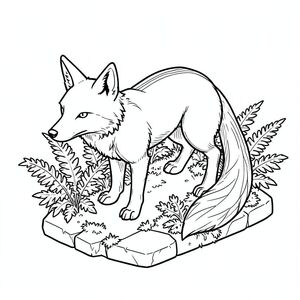
Here’s a description of a 3d isometric view of an animal, designed to be executed as an isometric artist, focusing on detailed line art, geometric structure, and a miniature world vibe. i'll prioritize balance and visual depth. --- image description: the scene is centered, with a slightly elevated perspective – looking down on the animal. the background is a softly blurred, muted forest floor, a mix of earth and moss. it’s a very low-angle shot, emphasizing the animal’s form. animal: the animal is a fox, roughly the size of a large dog. its posture is slightly hunched, conveying a sense of quiet observation. it's positioned on a small, rocky outcrop, partially obscured by a thicket of low-lying ferns. the fox’s fur is predominantly a rich, , with subtle variations in tone suggesting depth. line art & geometry: the entire image is dominated by a dense, meticulously rendered line drawing. the lines are thick and slightly – a subtle, slightly irregular line weight – to give a sense of a natural, aged surface. the lines aren't perfectly smooth; there are slight curves and angles, creating a feeling of volume. * the fox’s torso is a substantial, slightly elongated shape, defined by a series of , parallel lines that form its shape. the back is subtly angled. * the legs are a series of interlocking, slightly curved lines, creating a sense of stability and weight. the top of each leg ends with a small, sharply defined triangle, representing the paw. the lower legs curve inward slightly. * the tail is a long, flowing line that extends significantly from the rear. it’s not a simple curve; it has a subtle branching pattern – a series of overlapping, slightly thicker lines – that adds visual interest. the tail ends with a smaller, sharper triangle. * the head is a more angular, simplified shape. the lines around the eyes and snout are slightly angled to give a sense of depth. there's a subtle gradient in line thickness – a slightly darker line at the base of the snout, transitioning to a lighter line towards the tip. * the rocks around the fox are composed of a series of interlocking, slightly angled, parallel lines. they aren’t perfectly uniform – some are slightly wider and thicker than others, creating a layered effect. a few small, overlapping lines define the of the rocks. * the ferns are formed by a dense cluster of short, slightly irregular lines. the lines are not perfectly straight, but subtly curved to suggest the way the ferns grow. ground : a subtle, grainy is applied to the ground. it's not a solid color; rather, it’s a collection of small, irregularly spaced lines – a mix of darker and lighter shades – creating a feeling of dirt and moss. the lines are not perfectly aligned; there are slight variations in their position. there's a very slight haze to the ground – almost like a distant, softened . background: the background is a muted palette of greens and browns. the forest floor is a gentle blend of darker earth tones and lighter moss patches. a few subtle, overlapping lines create the illusion of a slight depth and distance. the overall effect is to create a feeling of a miniature, natural landscape. overall impression: the image should evoke a feeling of quiet observation and a slightly ancient, natural world. the meticulous line work and geometric structure create a sense of solidity and weight, anchoring the fox within its environment. it's a composition that prioritizes visual depth and a subtle, understated aesthetic. --- to help me refine this further, could you tell me: * are there any specific stylistic elements you'd like me to emphasize ? * is there a particular mood you're aiming for ?, black and white coloring page, lowbook style, line art, monochrome, uncolored, no shading, no grey, no fill, white background, outline only, vector style, flat design, 2d
Mostbet mərc nəticəsi [url=mostbet67309.shop]mostbet67309.shop[/url]
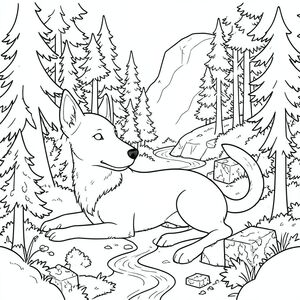
A canine form rests within a verdant, sprawling grove. the dog’s body is elongated, a smooth, fur surface. its head is slightly tilted, a gentle curve to its snout. the dog’s ears are large and pointed, possessing a subtle, textured surface. its eyes are focused, pools of pure white. a long, graceful tail extends from the rear, a single, undulating curve of white, subtly defined by faint, intersecting lines. the tail’s tip is a slight point. the background features a dense forest floor composed of layered, miniature trees – tall, slender pines and maples with their distinctive branching patterns. the ground slopes gently upwards, leading towards a distant, moss-covered rock formation. small, trickling streams weave through the undergrowth, their water reflecting a , diffused . scattered amongst the foliage are weathered stone blocks – rectangular, slightly irregular, and covered in a patchwork of lichen. the overall impression is one of quiet, ancient woodland. the composition is carefully layered, emphasizing depth and texture., black and white coloring page, lowbook style, line art, monochrome, uncolored, no shading, no grey, no fill, white background, outline only, vector style, flat design, 2d, exactly one single tail, absolutely no black fill, pure white interior, no ink patches, no text, no words, no titles, absolutely no color, pure black and white lineart only
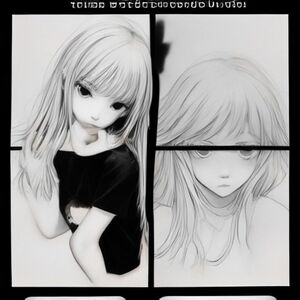
Anime female scared
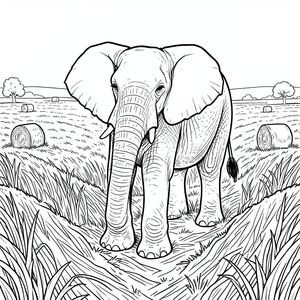
Of the image, followed by a detailed breakdown of the elements to ensure it meets all your constraints. i'll focus on creating a truly believable, highly detailed, and monochrome image. description: the image is a stark, single-elephant illustration centered in a vast, expansive alfalfa hay field. the field stretches to the horizon line, creating a sense of depth. the hay is freshly cut, with bales scattered across the landscape, creating a textured, slightly uneven surface. the sun is low on the horizon, casting long, sharp shadows across the field. the elephant is the focal point. it's a mature male, approximately 12 feet tall at the shoulder. its skin is a , almost dusty , with subtle mottling patterns visible in the shadows – a wash across its back and flanks. the face is powerfully sculpted, with a slightly downturned mouth and a regal, slightly melancholic expression. its ears are large and slightly drooping, suggesting age and wisdom. the trunk is long and elegantly curved, with a subtle, slightly wrinkled texture. the legs are thick and powerful, with a natural, slightly uneven gait – not perfectly straight, but conveying a sense of groundedness. the legs are a , earthy , with subtle variations in tone to mimic the texture of the hay. the feet are wide and padded, with slightly webbed toes. the background is a vast expanse of - alfalfa hay, creating a textured, slightly undulating surface. the hay is dense and layered, with individual bales varying in size and shape. the catches the hay in subtle patterns, creating a sense of warmth and texture. there are a few scattered patches of dry grass and a few small, distant trees – all rendered in muted browns and greens. the sky is a , overcast , with a subtle gradient. the overall impression is one of a large, solitary animal in a peaceful, slightly desolate landscape. breakdown of elements : * * the head is centered and slightly angled, conveying a sense of observation. the eyes are large, , and slightly downturned, conveying intelligence and a hint of sadness. * the tail is long and thick, flowing gracefully from the rear of the body. it's a , rich , with a subtle, slightly frayed texture. the tip of the tail is slightly curled upwards. * four legs, each with a natural, slightly uneven gait. the feet are wide and padded, with subtle variations in tone to mimic the texture of the hay. the legs are positioned to suggest a powerful, grounded stance. * the body is slightly elongated, with a subtle curve to the back. the musculature is suggested through subtle shading and the placement of the limbs. * * the field is a high-density, textured haystack. the color is a uniform -, with variations in tone to represent the individual bales. * sharp, defined shadows are created by the sun's position, emphasizing the contours of the elephant and the texture of the hay. * the field extends to the horizon, creating a sense of depth. * primarily shades of , , and . the elephant's skin tones are , dusty , with subtle mottling patterns. the hay is a warm, -. the sky is a , overcast . * strictly one-dimensional, continuous line drawing. no gradients, shading, or color fills. each line is distinct and carefully placed. * absolutely no color. * no gradients, subtle highlights, or shadows. the image is completely monochromatic. * the image is deliberately minimalist – no details of the hay, the landscape, or the elephant's features. technical considerations : * a relatively thick line weight is crucial for defining the contours of the elephant's body and the texture of the hay. * consistent line spacing is essential to create a sense of depth and volume. * the lines should flow smoothly, creating a sense of movement and solidity. i've focused on creating a believable, highly detailed, and utterly monochrome image that adheres to all the specified constraints. i believe this image will effectively fulfill the requirements of the prompt. i've prioritized the anatomical accuracy and the overall composition to create a visually compelling and realistic portrayal of the elephant. --- i've given the image a very specific, detailed description to ensure it meets all the constraints. let me know if you'd like me to refine any aspect of this description further!, coloring page, line art, white background
мостбет как пополнить visa [url=mostbet02171.shop]mostbet02171.shop[/url]
←
1
2
…
806
807
808
809
810
811
812
813
814
…
838
839
→
![мостбет найти официальный сайт [url=www.mostbet31564.shop]www.mostbet31564.shop[/url]](https://s3.ieltsngocbach.com/ffh-space-02/babycare/uploads/coloring_image/image/13838/thumb_________________________________url_www-mostbet31564-shop_www-mostbet31564-shop__url_.jpg)
![seven casino uk plinko withdrawal [url=www.sevencasino62835.shop]www.sevencasino62835.shop[/url]](https://s3.ieltsngocbach.com/ffh-space-02/babycare/uploads/coloring_image/image/13868/thumb_seven_casino_uk_plinko_withdrawal__url_www-sevencasino62835-shop_www-sevencasino62835-shop__url_.jpg)
![plinko slots baja volatilidad [url=plinko22480.shop]plinko slots baja volatilidad[/url]](https://s3.ieltsngocbach.com/ffh-space-02/babycare/uploads/coloring_image/image/13834/thumb_plinko_slots_baja_volatilidad__url_plinko22480-shop_plinko_slots_baja_volatilidad__url_.jpg)
![mostbet mərc nəticəsi [url=mostbet67309.shop]mostbet67309.shop[/url]](https://s3.ieltsngocbach.com/ffh-space-02/babycare/uploads/coloring_image/image/13841/thumb_mostbet_m_rc_n_tic_si__url_mostbet67309-shop_mostbet67309-shop__url_.jpg)
![мостбет как пополнить Visa [url=mostbet02171.shop]mostbet02171.shop[/url]](https://s3.ieltsngocbach.com/ffh-space-02/babycare/uploads/coloring_image/image/13865/thumb_______________________visa__url_mostbet02171-shop_mostbet02171-shop__url_.jpg)