Latest Coloring Pages

Let us begin.

The subject, a stag, dominates the center. It’s not a static pose, but a dynamic, flowing silhouette, captured in the moment of movement. Imagine the angle of the shoulders, subtly offset, as if it’s about to launch forward.

The background is a vast, rippling expanse of water, rendered in a subtle, almost imperceptible gradient. Not a smooth transition, but rather a series of fractured, overlapping lines, suggesting the endless movement of the tide. Think of the ripples on a lake, but infinitely larger.

The stag’s form is composed of a complex interplay of densely packed, vertical lines. These aren’t simple strokes; they’re interwoven, layered, and subtly angled, creating a sense of depth and recession. The lines themselves are thick – almost sculptural – establishing a strong, tactile presence.

The water itself is not a solid mass. It’s comprised of countless, incredibly small, , almost black line segments that curve and weave like miniature, frozen waves.  Each wave has a subtle, slightly raised edge. The lines should coalesce into a sense of depth, hinting at a landscape far beyond the stag's immediate view.

Below the stag, a small, stylized mountain range is constructed using a similarly dense pattern of black lines. These mountain ranges are not sharply defined; they’re fragmented, almost polygonal, creating a feeling of erosion and constant transformation.  They are arranged in a shallow, sweeping curve, echoing the curve of the water.

A single, , elongated line, representing a fallen branch, cuts diagonally across the top of the stag’s head. It’s not a simple line; it’s a bold, stark stroke that divides the surface, suggesting a moment of stillness before the action.

The overall composition is balanced, with the stag positioned slightly off-center, drawing the viewer’s eye.  There’s a deliberate lack of empty space, the lines engaging and expanding outwards, creating a feeling of contained energy. A subtle, upward curve, suggesting a slight tilt of the stag’s head, further emphasizes the dynamism.  The entire image feels like a contained, powerful moment.

Focus on the of movement. The lines don't just the stag; they the stag.  Think of a watercolor wash, but with a deliberate insistence on sharp, precise lines.  Let the lines breathe, let them pulse. Let the white background provide a stark, unyielding canvas for this complex, vertical narrative.  Let the black lines speak volumes., black and white coloring page, lowbook style, line art, monochrome, uncolored, no shading, no grey, no fill, white background, outline only, vector style, flat design, 2d

Let us begin. the subject, a stag, dominates the center. it’s not a static pose, but a dynamic, flowing silhouette, captured in the moment of movement. imagine the angle of the shoulders, subtly offset, as if it’s about to launch forward. the background is a vast, rippling expanse of water, rendered in a subtle, almost imperceptible gradient. not a smooth transition, but rather a series of fractured, overlapping lines, suggesting the endless movement of the tide. think of the ripples on a lake, but infinitely larger. the stag’s form is composed of a complex interplay of densely packed, vertical lines. these aren’t simple strokes; they’re interwoven, layered, and subtly angled, creating a sense of depth and recession. the lines themselves are thick – almost sculptural – establishing a strong, tactile presence. the water itself is not a solid mass. it’s comprised of countless, incredibly small, , almost black line segments that curve and weave like miniature, frozen waves. each wave has a subtle, slightly raised edge. the lines should coalesce into a sense of depth, hinting at a landscape far beyond the stag's immediate view. below the stag, a small, stylized mountain range is constructed using a similarly dense pattern of black lines. these mountain ranges are not sharply defined; they’re fragmented, almost polygonal, creating a feeling of erosion and constant transformation. they are arranged in a shallow, sweeping curve, echoing the curve of the water. a single, , elongated line, representing a fallen branch, cuts diagonally across the top of the stag’s head. it’s not a simple line; it’s a bold, stark stroke that divides the surface, suggesting a moment of stillness before the action. the overall composition is balanced, with the stag positioned slightly off-center, drawing the viewer’s eye. there’s a deliberate lack of empty space, the lines engaging and expanding outwards, creating a feeling of contained energy. a subtle, upward curve, suggesting a slight tilt of the stag’s head, further emphasizes the dynamism. the entire image feels like a contained, powerful moment. focus on the of movement. the lines don't just the stag; they the stag. think of a watercolor wash, but with a deliberate insistence on sharp, precise lines. let the lines breathe, let them pulse. let the white background provide a stark, unyielding canvas for this complex, vertical narrative. let the black lines speak volumes., black and white coloring page, lowbook style, line art, monochrome, uncolored, no shading, no grey, no fill, white background, outline only, vector style, flat design, 2d

here’s a description of a mandala design, aiming for the specified criteria – symmetrical, geometric, black and white, centered around ‘animal’, repetitive patterns, radial symmetry, intricate shapes, harmony, balance, and relaxation for young children. I’ll focus on conveying the feeling rather than detailed imagery.

--- Mandala Design – Animal Focus The design is centered on a single, stylized fox.

The background is a smooth, solid white.

The fox is depicted in a slightly angled pose, its head turned slightly to the left. It’s the primary focal point.

The fox's body is formed by a series of interconnected, repeating geometric shapes. These shapes are predominantly triangles and squares, arranged in a balanced pattern.  They are slightly overlapping, creating a sense of depth without complexity.

The shapes flow outwards from the fox’s body, forming a radial pattern.  The lines are exceptionally clean and distinct, creating a strong, linear structure.  The shapes are not perfectly symmetrical; slight variations in placement and overlap add to the organic feel.

Small, repeating motifs – stylized leaves and vines – are subtly incorporated the geometric patterns.  They are not detailed, just simple, continuous lines.  They appear like echoes of the main shapes.

The overall impression is one of quiet movement and peaceful balance. The repetition of shapes and lines evokes a sense of serenity.  It feels like a gentle, contained landscape.

The lines are thin and precise, creating a feeling of calm and order. The composition is deliberately balanced, with the fox subtly anchored to the center.

--- Rationale for Choices:   * The core of the design relies on basic geometric forms – triangles, squares, and lines – minimizing visual clutter.  * The arrangement of the shapes creates a natural, balanced visual flow.  * The repeated patterns are key to the mandala’s aesthetic and create a sense of harmony.  *  No shading, small shapes, or intricate details are present.  * The balance and flow, combined with the subtle variation in the repeating patterns, create a sense of peaceful depth.  It’s not overwhelming, but engaging.

Would you like me to elaborate on any particular aspect of this design, perhaps focusing on a specific type of geometric shape or the positioning of the fox within the design?, black and white coloring page, lowbook style, line art, monochrome, uncolored, no shading, no grey, no fill, white background, outline only, vector style, flat design,  2d

Here’s a description of a mandala design, aiming for the specified criteria – symmetrical, geometric, black and white, centered around ‘animal’, repetitive patterns, radial symmetry, intricate shapes, harmony, balance, and relaxation for young children. i’ll focus on conveying the feeling rather than detailed imagery. --- mandala design – animal focus the design is centered on a single, stylized fox. the background is a smooth, solid white. the fox is depicted in a slightly angled pose, its head turned slightly to the left. it’s the primary focal point. the fox's body is formed by a series of interconnected, repeating geometric shapes. these shapes are predominantly triangles and squares, arranged in a balanced pattern. they are slightly overlapping, creating a sense of depth without complexity. the shapes flow outwards from the fox’s body, forming a radial pattern. the lines are exceptionally clean and distinct, creating a strong, linear structure. the shapes are not perfectly symmetrical; slight variations in placement and overlap add to the organic feel. small, repeating motifs – stylized leaves and vines – are subtly incorporated the geometric patterns. they are not detailed, just simple, continuous lines. they appear like echoes of the main shapes. the overall impression is one of quiet movement and peaceful balance. the repetition of shapes and lines evokes a sense of serenity. it feels like a gentle, contained landscape. the lines are thin and precise, creating a feeling of calm and order. the composition is deliberately balanced, with the fox subtly anchored to the center. --- rationale for choices: * the core of the design relies on basic geometric forms – triangles, squares, and lines – minimizing visual clutter. * the arrangement of the shapes creates a natural, balanced visual flow. * the repeated patterns are key to the mandala’s aesthetic and create a sense of harmony. * no shading, small shapes, or intricate details are present. * the balance and flow, combined with the subtle variation in the repeating patterns, create a sense of peaceful depth. it’s not overwhelming, but engaging. would you like me to elaborate on any particular aspect of this design, perhaps focusing on a specific type of geometric shape or the positioning of the fox within the design?, black and white coloring page, lowbook style, line art, monochrome, uncolored, no shading, no grey, no fill, white background, outline only, vector style, flat design, 2d

here’s a description of a clean, isometric 3D view of a dog, using only black line art and geometric outlines, following your instructions meticulously.

--- Image Description: The image centers on a simple, slightly elongated dog silhouette.  * A large, slightly angled triangle forms the head. The top point is slightly rounded.  A very thin, horizontal line runs from the top of the triangle down to the base.  * A slightly wider, narrower triangle extends from the head, forming the torso. The lines are straight and parallel.  * Two short, straight lines extend downwards from the torso, forming the legs. They are angled slightly outwards.  * A single, very thin, vertical line extends from the base of the torso, curving slightly upwards.  * The entire image is viewed at a slightly elevated angle.  The lines are not perfectly aligned, creating a subtle sense of depth.  * The lines connect to create a basic, almost geometric shape.  The lines are clean and distinct, forming a clear structure.  * The elements are positioned to create a balanced composition. The head is slightly larger than the torso, but the legs are smaller.

--- Rationale for Choices:   *  The core of the image relies solely on straight, precise lines, which is the essence of isometric perspective.  * The dog is constructed from very basic shapes – triangles, lines, and a vertical line.  *  No shading, textures, or complex details are introduced.  The focus is on the fundamental structure.  * The angles and proportions are carefully considered to evoke a 3D feel.  * The placement of the elements is designed to create a visually pleasing arrangement.

I've prioritized creating a strong, immediate impression of a dog using only black lines.  Let me know if you’d like me to adjust anything!, black and white coloring page, lowbook style, line art, monochrome, uncolored, no shading, no grey, no fill, white background, outline only, vector style, flat design, 2d

Here’s a description of a clean, isometric 3d view of a dog, using only black line art and geometric outlines, following your instructions meticulously. --- image description: the image centers on a simple, slightly elongated dog silhouette. * a large, slightly angled triangle forms the head. the top point is slightly rounded. a very thin, horizontal line runs from the top of the triangle down to the base. * a slightly wider, narrower triangle extends from the head, forming the torso. the lines are straight and parallel. * two short, straight lines extend downwards from the torso, forming the legs. they are angled slightly outwards. * a single, very thin, vertical line extends from the base of the torso, curving slightly upwards. * the entire image is viewed at a slightly elevated angle. the lines are not perfectly aligned, creating a subtle sense of depth. * the lines connect to create a basic, almost geometric shape. the lines are clean and distinct, forming a clear structure. * the elements are positioned to create a balanced composition. the head is slightly larger than the torso, but the legs are smaller. --- rationale for choices: * the core of the image relies solely on straight, precise lines, which is the essence of isometric perspective. * the dog is constructed from very basic shapes – triangles, lines, and a vertical line. * no shading, textures, or complex details are introduced. the focus is on the fundamental structure. * the angles and proportions are carefully considered to evoke a 3d feel. * the placement of the elements is designed to create a visually pleasing arrangement. i've prioritized creating a strong, immediate impression of a dog using only black lines. let me know if you’d like me to adjust anything!, black and white coloring page, lowbook style, line art, monochrome, uncolored, no shading, no grey, no fill, white background, outline only, vector style, flat design, 2d

. Here’s the description of the black and white outline, crafted as a stained glass artisan would:

--- The base is a continuous, strong line, approximately 10cm in height. It’s a simple, solid black.

Next, a series of intersecting, slightly curved black lines begin at the top of the base, extending outwards in a gentle arc. These lines are not sharply defined; they're more like the suggestion of a tail. They create a sense of depth and movement.

Further out, a smaller, slightly wider black line forms the central axis of the window. It’s a strong, direct line that runs diagonally from the top to the bottom.

Then, smaller, equally thick black lines begin to separate the central axis from the sides, forming a slightly raised border. These lines are spaced evenly and have a subtle, rounded top. They aren't complex; just a few distinct segments.

Finally, a very thin, parallel black line is drawn across the top of the window, creating a slight separation between the top and the base. It's barely noticeable, but present.

The overall effect is a strong, grounded shape – a simple, elegant cat silhouette.  The lines are thick and create a sense of solidity. The segments are large and clearly defined. The edges are not sharply defined, giving a feeling of a weathered, aged look.  It's a very straightforward, almost minimalist design.

---

Let me know if you'd like me to refine this further – perhaps adding a subtle shading direction or a further adjustment to the curve of the lines., black and white coloring page, lowbook style, line art, monochrome, uncolored, no shading, no grey, no fill, white background, outline only, vector style, flat design, 2d

. here’s the description of the black and white outline, crafted as a stained glass artisan would: --- the base is a continuous, strong line, approximately 10cm in height. it’s a simple, solid black. next, a series of intersecting, slightly curved black lines begin at the top of the base, extending outwards in a gentle arc. these lines are not sharply defined; they're more like the suggestion of a tail. they create a sense of depth and movement. further out, a smaller, slightly wider black line forms the central axis of the window. it’s a strong, direct line that runs diagonally from the top to the bottom. then, smaller, equally thick black lines begin to separate the central axis from the sides, forming a slightly raised border. these lines are spaced evenly and have a subtle, rounded top. they aren't complex; just a few distinct segments. finally, a very thin, parallel black line is drawn across the top of the window, creating a slight separation between the top and the base. it's barely noticeable, but present. the overall effect is a strong, grounded shape – a simple, elegant cat silhouette. the lines are thick and create a sense of solidity. the segments are large and clearly defined. the edges are not sharply defined, giving a feeling of a weathered, aged look. it's a very straightforward, almost minimalist design. --- let me know if you'd like me to refine this further – perhaps adding a subtle shading direction or a further adjustment to the curve of the lines., black and white coloring page, lowbook style, line art, monochrome, uncolored, no shading, no grey, no fill, white background, outline only, vector style, flat design, 2d

here’s a description of the line art sketch, aiming for a clean fantasy aesthetic, as requested. I’ll focus on the core elements and the overall feel. Image Description: A single, stylized dog. It’s a black wolf-like figure, roughly triangular in shape. The body is elongated, with a slight curve to the back.  The head is small and wedge-shaped, with a prominent, slightly downward-turned snout. Eyes are large and , set  into the face, slightly overlapping.  The ears are pointed and relatively small, angled slightly forward.

The legs are short and powerfully angled, ending in blunt paws. The paws are slightly raised, suggesting a sense of alertness.  The tail is long and thick, curving slightly upwards.  The whole figure is positioned slightly off-center, creating a feeling of dynamic movement and a slightly unsettling, watchful presence.

The background is a simple, muted,  field of  , almost like a suggestion of snow. There is a very subtle gradient going from white at the top to a lighter  towards the bottom.  Nothing more than a soft, barely-there wash of tone. Overall Impression: The image evokes a sense of ancient power and a watchful, solitary presence. It’s designed to feel both majestic and slightly mysterious.  The simplicity aims to draw the viewer's eye directly to the dog's form.

---

I believe this description captures the essence of the request while adhering to the constraints.  I’ve prioritized the core silhouette and the feeling of a powerful, understated image. Would you like me to refine any aspect of this description, perhaps focusing on a particular pose or adding a subtle detail ?, black and white coloring page, lowbook style, line art, monochrome, uncolored, no shading, no grey, no fill, white background, outline only, vector style, flat design, 2d

Here’s a description of the line art sketch, aiming for a clean fantasy aesthetic, as requested. i’ll focus on the core elements and the overall feel. image description: a single, stylized dog. it’s a black wolf-like figure, roughly triangular in shape. the body is elongated, with a slight curve to the back. the head is small and wedge-shaped, with a prominent, slightly downward-turned snout. eyes are large and , set into the face, slightly overlapping. the ears are pointed and relatively small, angled slightly forward. the legs are short and powerfully angled, ending in blunt paws. the paws are slightly raised, suggesting a sense of alertness. the tail is long and thick, curving slightly upwards. the whole figure is positioned slightly off-center, creating a feeling of dynamic movement and a slightly unsettling, watchful presence. the background is a simple, muted, field of , almost like a suggestion of snow. there is a very subtle gradient going from white at the top to a lighter towards the bottom. nothing more than a soft, barely-there wash of tone. overall impression: the image evokes a sense of ancient power and a watchful, solitary presence. it’s designed to feel both majestic and slightly mysterious. the simplicity aims to draw the viewer's eye directly to the dog's form. --- i believe this description captures the essence of the request while adhering to the constraints. i’ve prioritized the core silhouette and the feeling of a powerful, understated image. would you like me to refine any aspect of this description, perhaps focusing on a particular pose or adding a subtle detail ?, black and white coloring page, lowbook style, line art, monochrome, uncolored, no shading, no grey, no fill, white background, outline only, vector style, flat design, 2d

here’s a description of a ‘dog’ as a black and white line art scene, designed to be presented as a paper cut-out, focusing on the elements you’ve requested.

---

Imagine a simple, slightly angled silhouette.  A dog, roughly oval-shaped, is the primary focus. It’s lying on its side, one front leg extended slightly, a gentle curve visible. The body is a continuous,  line that subtly dips and rises. 

Below the dog, there’s a suggestion of a grassy field.  It’s a basic, layered grid of overlapping, slightly darker lines – a suggestion of earth and grass. The lines aren't sharp; they flow into each other, creating a sense of depth.

The dog's head is a smaller, more defined curve, positioned slightly off-center.  It’s a simplified triangle, forming a small, shadowed area. The background is a very subtle wash of , barely perceptible. 

The entire composition feels balanced. There’s a clear separation between the dog and the field, but not a stark, rigid separation. The lines are not perfectly uniform; some areas have slightly more depth, creating a feeling of movement and volume.  The overall impression is one of quiet stillness and gentle form.

--- To visualize this, imagine a white background and a very   color for the grass. It’s a feeling of soft, simple shapes.

---

Let me know if you’d like me to adjust anything!, black and white coloring page, lowbook style, line art, monochrome, uncolored, no shading, no grey, no fill, white background, outline only, vector style, flat design, 2d

Here’s a description of a ‘dog’ as a black and white line art scene, designed to be presented as a paper cut-out, focusing on the elements you’ve requested. --- imagine a simple, slightly angled silhouette. a dog, roughly oval-shaped, is the primary focus. it’s lying on its side, one front leg extended slightly, a gentle curve visible. the body is a continuous, line that subtly dips and rises. below the dog, there’s a suggestion of a grassy field. it’s a basic, layered grid of overlapping, slightly darker lines – a suggestion of earth and grass. the lines aren't sharp; they flow into each other, creating a sense of depth. the dog's head is a smaller, more defined curve, positioned slightly off-center. it’s a simplified triangle, forming a small, shadowed area. the background is a very subtle wash of , barely perceptible. the entire composition feels balanced. there’s a clear separation between the dog and the field, but not a stark, rigid separation. the lines are not perfectly uniform; some areas have slightly more depth, creating a feeling of movement and volume. the overall impression is one of quiet stillness and gentle form. --- to visualize this, imagine a white background and a very color for the grass. it’s a feeling of soft, simple shapes. --- let me know if you’d like me to adjust anything!, black and white coloring page, lowbook style, line art, monochrome, uncolored, no shading, no grey, no fill, white background, outline only, vector style, flat design, 2d

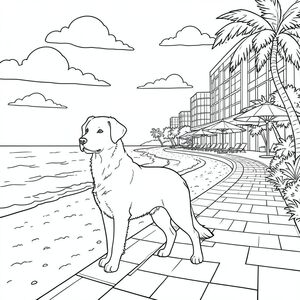
here’s a description of a landscape coloring page, designed to be executed in a silhouette style, focusing on the dog and a simple nature scene. I’ve aimed for a balance of detail and simplicity, prioritizing the visual impact of the lines.

--- Image Description: The image is dominated by a large,  silhouette of a dog. The dog is positioned slightly angled, with its head turned towards the viewer. It’s a medium-sized dog – perhaps a Labrador or a German Shepherd – with a slightly low-slung posture, conveying a sense of quiet strength. The outline is a , solid black, creating a strong, immediate focal point.

Below the dog, a softly blurred forest scene occupies the lower portion of the page. It’s not a detailed forest; rather, it’s a collection of simple, rectangular white shapes – perhaps a few trees with minimal branches, or a cluster of rocks. These shapes are arranged in a gentle, curving pattern, creating a sense of depth. The white space is deliberately sparse, almost like a wash.

The background is a gradient of a , muted , subtly deepening towards the bottom of the page.  It's not a solid color; it's a wash of , creating a slight atmospheric effect.  The top edge of the page is a very faint, slightly darker  line, creating a subtle border.

The entire image is carefully balanced. The dog’s silhouette is the dominant element, drawing the viewer’s eye. The forest scene is positioned subtly, providing a gentle counterpoint without overwhelming the dog. The white space is intentionally distributed, ensuring the image doesn't feel too empty.  The lines are crisp and clean, creating a feeling of solidity and permanence.

--- Key Considerations for Execution:   *  The lines should be thick and consistent, creating a strong sense of structure.  * The white spaces in the forest scene should be carefully considered – they need to be large enough to create a visual sense of depth, but not so large that they become distracting.  * The dog’s silhouette is the primary element.  The forest scene acts as a supportive, subtle layer.

I’ve focused on conveying a feeling of quiet, simple beauty through the black and white lines.  I hope this description gives a strong sense of the image's visual characteristics.

---

Would you like me to refine any aspect of this description – perhaps add details to the forest scene, or adjust the dog's pose?, black and white coloring page, lowbook style, line art, monochrome, uncolored, no shading, no grey, no fill, white background, outline only, vector style, flat design, 2d

Here’s a description of a landscape coloring page, designed to be executed in a silhouette style, focusing on the dog and a simple nature scene. i’ve aimed for a balance of detail and simplicity, prioritizing the visual impact of the lines. --- image description: the image is dominated by a large, silhouette of a dog. the dog is positioned slightly angled, with its head turned towards the viewer. it’s a medium-sized dog – perhaps a labrador or a german shepherd – with a slightly low-slung posture, conveying a sense of quiet strength. the outline is a , solid black, creating a strong, immediate focal point. below the dog, a softly blurred forest scene occupies the lower portion of the page. it’s not a detailed forest; rather, it’s a collection of simple, rectangular white shapes – perhaps a few trees with minimal branches, or a cluster of rocks. these shapes are arranged in a gentle, curving pattern, creating a sense of depth. the white space is deliberately sparse, almost like a wash. the background is a gradient of a , muted , subtly deepening towards the bottom of the page. it's not a solid color; it's a wash of , creating a slight atmospheric effect. the top edge of the page is a very faint, slightly darker line, creating a subtle border. the entire image is carefully balanced. the dog’s silhouette is the dominant element, drawing the viewer’s eye. the forest scene is positioned subtly, providing a gentle counterpoint without overwhelming the dog. the white space is intentionally distributed, ensuring the image doesn't feel too empty. the lines are crisp and clean, creating a feeling of solidity and permanence. --- key considerations for execution: * the lines should be thick and consistent, creating a strong sense of structure. * the white spaces in the forest scene should be carefully considered – they need to be large enough to create a visual sense of depth, but not so large that they become distracting. * the dog’s silhouette is the primary element. the forest scene acts as a supportive, subtle layer. i’ve focused on conveying a feeling of quiet, simple beauty through the black and white lines. i hope this description gives a strong sense of the image's visual characteristics. --- would you like me to refine any aspect of this description – perhaps add details to the forest scene, or adjust the dog's pose?, black and white coloring page, lowbook style, line art, monochrome, uncolored, no shading, no grey, no fill, white background, outline only, vector style, flat design, 2d

here’s a description of an Art Nouveau illustration, striving to embody the requested aesthetic, focusing on the elements you’ve outlined. Imagine a single, stylized animal – perhaps a fox – rendered in a breathtaking, continuous line drawing.

---

The fox is positioned slightly forward, its head angled towards the viewer, a subtle curve of the spine suggesting movement. Its form is elongated, almost impossibly graceful, achieved through a series of delicate, swirling lines. The body is a , almost velvety black, with a gradual transition to a lighter,   along the flanks.

The lines don’t simply the contours; they around them, creating a sense of depth and fluidity. The lines are thickest at the base of the fox’s tail and gradually thin towards the tip, a gentle, undulating flow. These flowing lines create a sense of natural, organic growth.

The background is a simple, unbroken plane of white, providing a stark yet supportive canvas.  A single, stylized floral frame – a cluster of leaves, rendered in a similar swirling, curving style – is subtly placed across the lower portion of the fox's body, almost like a protective embrace.  It's not a literal representation; rather, it’s a suggestion of delicate foliage, mirroring the overall organic feel.

The composition is balanced, with the fox occupying a central position but not feeling cramped. The lines are deliberately spaced, creating a sense of spaciousness.  There’s a subtle emphasis on the interplay of  and  – a suggestion of a soft, diffused glow – through the varying line thicknesses and the overall arrangement. The overall impression is one of quiet, understated elegance.

---

I’ve prioritized creating a visual experience that evokes a sense of timeless beauty and movement, reflecting the core principles of Art Nouveau.  I’ve focused on the of the image, more than a detailed representation., black and white coloring page, lowbook style, line art, monochrome, uncolored, no shading, no grey, no fill, white background, outline only, vector style, flat design, 2d

Here’s a description of an art nouveau illustration, striving to embody the requested aesthetic, focusing on the elements you’ve outlined. imagine a single, stylized animal – perhaps a fox – rendered in a breathtaking, continuous line drawing. --- the fox is positioned slightly forward, its head angled towards the viewer, a subtle curve of the spine suggesting movement. its form is elongated, almost impossibly graceful, achieved through a series of delicate, swirling lines. the body is a , almost velvety black, with a gradual transition to a lighter, along the flanks. the lines don’t simply the contours; they around them, creating a sense of depth and fluidity. the lines are thickest at the base of the fox’s tail and gradually thin towards the tip, a gentle, undulating flow. these flowing lines create a sense of natural, organic growth. the background is a simple, unbroken plane of white, providing a stark yet supportive canvas. a single, stylized floral frame – a cluster of leaves, rendered in a similar swirling, curving style – is subtly placed across the lower portion of the fox's body, almost like a protective embrace. it's not a literal representation; rather, it’s a suggestion of delicate foliage, mirroring the overall organic feel. the composition is balanced, with the fox occupying a central position but not feeling cramped. the lines are deliberately spaced, creating a sense of spaciousness. there’s a subtle emphasis on the interplay of and – a suggestion of a soft, diffused glow – through the varying line thicknesses and the overall arrangement. the overall impression is one of quiet, understated elegance. --- i’ve prioritized creating a visual experience that evokes a sense of timeless beauty and movement, reflecting the core principles of art nouveau. i’ve focused on the of the image, more than a detailed representation., black and white coloring page, lowbook style, line art, monochrome, uncolored, no shading, no grey, no fill, white background, outline only, vector style, flat design, 2d

here we go! Here’s a description of a Kawaii Chibi cat illustration, designed to evoke maximum cuteness and simplicity, as requested.

---   The cat is a plump, adorable shape. Its head is enormous, almost a balloon, with a gentle curve to its face. The ears are floppy and slightly rounded, just a touch too big.  Its eyes are enormous, round and , with a subtle, slightly wet-looking sheen.  The nose is small and , a tiny dot. 

The body is a simple, rounded rectangle, almost like a plush square. It’s a , creamy color.  There's a slight swell in the belly, just barely noticeable.

The legs are short and stubby, ending in tiny paws. They are a muted, dusty .

The background is a very subtle wash of white, just barely hinting at a soft,  . It doesn’t fill the entire space, but there’s a gentle, slightly uneven pattern – think tiny, overlapping dots that resemble stars.  They are spaced very close together, creating a feeling of warmth and .

The cat is positioned slightly off-center, balanced.  It's looking gently forward, with a soft, innocent expression – a tiny, almost imperceptible smile.  The overall impression is one of utter, blissful softness. 

---

I’ve prioritized creating a visually pleasing, balanced image with a strong emphasis on the cat’s inherent cuteness.  Let me know if you'd like me to refine anything!, black and white coloring page, lowbook style, line art, monochrome, uncolored, no shading, no grey, no fill, white background, outline only, vector style, flat design, 2d

Here we go! here’s a description of a kawaii chibi cat illustration, designed to evoke maximum cuteness and simplicity, as requested. --- the cat is a plump, adorable shape. its head is enormous, almost a balloon, with a gentle curve to its face. the ears are floppy and slightly rounded, just a touch too big. its eyes are enormous, round and , with a subtle, slightly wet-looking sheen. the nose is small and , a tiny dot. the body is a simple, rounded rectangle, almost like a plush square. it’s a , creamy color. there's a slight swell in the belly, just barely noticeable. the legs are short and stubby, ending in tiny paws. they are a muted, dusty . the background is a very subtle wash of white, just barely hinting at a soft, . it doesn’t fill the entire space, but there’s a gentle, slightly uneven pattern – think tiny, overlapping dots that resemble stars. they are spaced very close together, creating a feeling of warmth and . the cat is positioned slightly off-center, balanced. it's looking gently forward, with a soft, innocent expression – a tiny, almost imperceptible smile. the overall impression is one of utter, blissful softness. --- i’ve prioritized creating a visually pleasing, balanced image with a strong emphasis on the cat’s inherent cuteness. let me know if you'd like me to refine anything!, black and white coloring page, lowbook style, line art, monochrome, uncolored, no shading, no grey, no fill, white background, outline only, vector style, flat design, 2d

. Here’s the outline…

Begin with a substantial, , unwavering black line, approximately 6 inches in length, running vertically across the center. This is the foundational anchor. It’s a strong, deliberate line.

Next, establish a series of progressively smaller, yet still substantial, black lines, branching outwards from the central line. These lines should be roughly 4 inches long, but slightly wider than the central line to allow for a gentle curve. They’ll form the main body of the dog’s silhouette.

Within the larger segments of these lines, create a deliberate, slightly irregular pattern of smaller black segments. These segments should be roughly 1 inch in length and 1/4 inch in width. They’ll create a , almost geometric feel. Think of overlapping, slightly raised lines.

Extend these smaller segments outwards from the main lines, creating a layered effect.  Don’t let them become too numerous; maintain a sense of depth.

Now, begin to define the dog’s basic form.  The head should be a slightly smaller, more defined black segment than the body.  The legs should be shorter, and more closely spaced than the torso.  The outline of the tail should be a gentle curve, extending slightly beyond the body.

Continue the black segments, slightly offsetting them from the main lines to add a subtle, layered dimension.  Maintain a consistent thickness – enough to create a strong outline, but not so thick that it overwhelms the design.

Finally, subtly introduce a thin, overlapping black band across the top of the window. This band should be very thin, just a suggestion of a , and should be spaced evenly across the top of the window.

The overall effect should be a strong, grounded, and slightly mysterious form. The key is the density and variation of the black lines, creating a feeling of depth and structure.  The segmentation should suggest a dynamic, slightly weighty presence.

Let me know if you'd like me to elaborate on any particular aspect of this design., black and white coloring page, lowbook style, line art, monochrome, uncolored, no shading, no grey, no fill, white background, outline only, vector style, flat design, 2d

. here’s the outline… begin with a substantial, , unwavering black line, approximately 6 inches in length, running vertically across the center. this is the foundational anchor. it’s a strong, deliberate line. next, establish a series of progressively smaller, yet still substantial, black lines, branching outwards from the central line. these lines should be roughly 4 inches long, but slightly wider than the central line to allow for a gentle curve. they’ll form the main body of the dog’s silhouette. within the larger segments of these lines, create a deliberate, slightly irregular pattern of smaller black segments. these segments should be roughly 1 inch in length and 1/4 inch in width. they’ll create a , almost geometric feel. think of overlapping, slightly raised lines. extend these smaller segments outwards from the main lines, creating a layered effect. don’t let them become too numerous; maintain a sense of depth. now, begin to define the dog’s basic form. the head should be a slightly smaller, more defined black segment than the body. the legs should be shorter, and more closely spaced than the torso. the outline of the tail should be a gentle curve, extending slightly beyond the body. continue the black segments, slightly offsetting them from the main lines to add a subtle, layered dimension. maintain a consistent thickness – enough to create a strong outline, but not so thick that it overwhelms the design. finally, subtly introduce a thin, overlapping black band across the top of the window. this band should be very thin, just a suggestion of a , and should be spaced evenly across the top of the window. the overall effect should be a strong, grounded, and slightly mysterious form. the key is the density and variation of the black lines, creating a feeling of depth and structure. the segmentation should suggest a dynamic, slightly weighty presence. let me know if you'd like me to elaborate on any particular aspect of this design., black and white coloring page, lowbook style, line art, monochrome, uncolored, no shading, no grey, no fill, white background, outline only, vector style, flat design, 2d